

POSTS:
Bernat Font

The mistake of “applying” the practice: the sponge cake approach
Bernat Font believes that it is more helpful to think of daily tasks and situations as the material we use to cultivate meditation skills rather as a place to "apply" them.
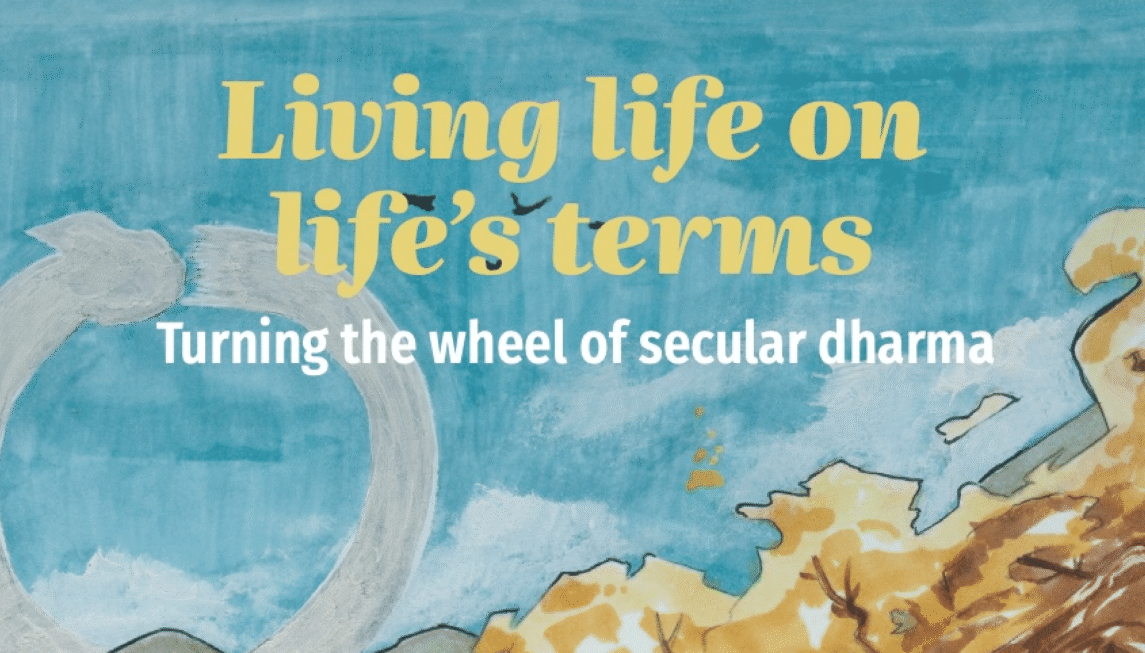
Tuwhiri’s next book: ‘Living life on life’s terms’
Tuwhiri, the secular Buddhist publishing imprint, will shortly be publishing ‘Living life on life’s terms: turning the wheel of secular dharma’ by Stephen Batchelor, Martine Batchelor and Bernat Font.

Goodbye to the historical Buddha?
Bernat Font discusses the controversy over whether the Buddha can be considered a historical figure.

Should Buddhism take sides?
Bernat Font argues that, while Buddhists should address controversial social and political topics, they should not succumb to the social pressure to 'take sides' and the response needs to be skillful, based on dharmic insights.

How to meditate without emotions
Bernat Font will offer a new way of approaching the concepts of vedana and emotion in an online course for Bodhi College, 7 May to 18 June.

On our fixation with the early texts
Arguing against the widespread view that the commentaries on the suttas are ossified and scholastic readings of the teachings, Bernat Font-Clos urges us to be open to finding in them important insights for our practice.

What are the core elements of a secular approach to the dharma?
At a recent online meeting of leaders and facilitators of secular Buddhist groups, organizations, and sanghas, various perspectives were offered on the best way to define or describe a secular approach to the dharma.

On resolving the neo-early Buddhist contradiction
Bernat Font-Clos identifies an important contradiction in the 'neo-early Buddhist' perspective prominent among many contemporary meditation teachers in the Insight tradition and proposes a resolution of the contradiction which is consistent with a life-affirming rather than a renunciant approach to our experiences.

An interview with Yanai Postelnik on meditation and climate change activism
Bernat Font Clos interviewed Yanai Postelnik, a meditation teacher who in recent years has been devoting more and more time to climate activism with the group Extinction Rebellion, a decentralized, international movement using non-violent direct action and civil disobedience to persuade governments to act on the climate emergency.

A queer critique of Buddhist renunciation
Bernat Font argues that the renunciant attitude underlying the noble truths and some meditation practices has to be examined with care and fully acknowledged; we may need to look beyond the early texts into how later Buddhisms addressed desire and embodiment, or into more contemporary perspectives. The richness of these teachings is vast: there are many ways to sit and celebrate.

The simile of the raft: another interpretation
The point of the simile of the raft is to realize that holding one's own version of the dharma as the only valid one and considering the others wrong is a form of attachment that will not lead to anything good and that contradicts the practice itself. In the long run a closed and dogmatic attitude will reinforce harmful mental patterns.

Why Buddhism is NOT a science of the mind: a review of Evan Thompson’s ‘Why I am not a Buddhist’
Bernat Font provides a summary and review of Evan Thompson's recent book, 'Why I am not a Buddhist'. While criticizing key concepts in 'Buddhist modernism', Thompson asserts that, at its best, Buddhism can challenge our excessive confidence that science explains what the world really is like while offering a radical critique to our narcissistic concern with the self.

Metta in the time of the coronavirus: responses of secular Buddhists to the pandemic
Several contributors to the Secular Buddhist Network website offer their insights on how we can best respond to the coronavirus pandemic. The common theme is that by fully understanding core Buddhist insights regarding impermanence, suffering, and interconnection, as well as cultivating an ethical stance of care and compassion, we can skillfully respond to this current crisis.

Covid or Co-life: from fear to love and community
As we face the world-wide pandemic caused by the Covid-19 (coronavirus), there is a tendency to retreat to social isolation, fear, and insecurity. In a recent online talk given to the Southsea Sangha, Bernat Font talks about the need to cultivate social connections, compassion and love in the midst of this great challenge.

Secular Buddhism
Secular dharma lowers the moon of nirvana down to our reach. It is no longer treated as a metaphysical reality distinct from everything we could conceive, or as a goal farther than far: it is about living each moment of our life from that place of non-greed, non-aversion and non-confusion.
- 1
- 2
EXPLORE BY SECTION
SEARCH THE SITE
RECENT POSTS


