


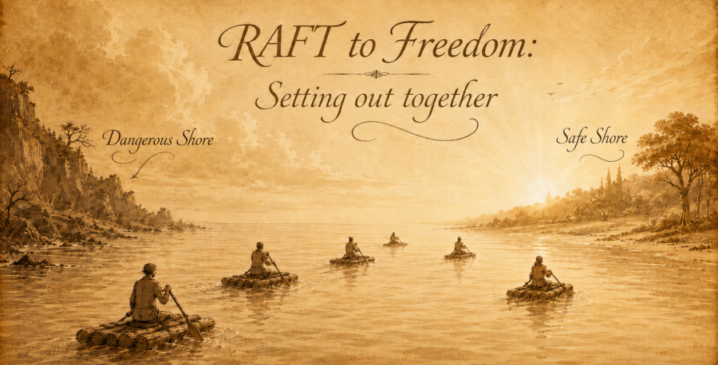
Having completed the first full journey through our 66-chapter program, we are preparing to set out again on September 1, 2026. RAFT to Freedom is a peer-led, task-based program grounded in secular Buddhism. It may be especially helpful to those seeking to change harmful cravings, compulsions, avoidance or destructive patterns, but it is not limited to recovery. It is open to anyone wishing to meet life’s difficulties and disappointments with greater clarity, kindness and steadiness.
Rather than treating the Four Noble Truths as beliefs to accept, we engage them as four practical tasks - recognizing, abandoning, feeling and training. This secular reading of Gotama’s early teaching is given shape with the help of Stephen Batchelor’s Cartography of Care, a map of the qualities and practices that support a flourishing life.
Anyone drawn to this approach is welcome. On September 1, 2026, we begin the complete 66-chapter journey again — one chapter a week for 66 weeks. In this article, we describe the key elements of our approach.
Building a raft from what we already have
Gotama, the man who later became known as the Buddha, used the image of a raft to describe a journey from suffering towards freedom.
When wide and deep water stands between us and the Far Shore, we do not wait for a perfect vessel to appear. We gather what is available, bind it together carefully and use it to make the crossing.
This image lies at the heart of the RAFT to Freedom ethos.
The raft is not something separate from us. It is built from the qualities, practices, relationships and understanding that can help us meet life with greater clarity, kindness, courage and care. Some of these materials may already be familiar to us. Others need to be discovered, cultivated or strengthened. No single practice is expected to carry us across. The raft works because its different parts support one another.
Perhaps we find ourselves reaching for something that promises relief, avoiding what feels difficult, becoming overwhelmed by painful emotions or returning to familiar ways of coping. Over time, these patterns can leave us feeling narrowed, disconnected or out of step with the life we want to live.
A task-based secular dharma
Rather than simply accepting the Four Noble Truths as statements of belief, this approach invites us to engage with them as practical tasks. Ways of embracing life as it really is, letting go of what causes harm, experiencing moments of freedom, and maintaining a life shaped by wisdom, ethical living and the cultivation of heart and mind. The program was inspired by Stephen Batchelor’s Cartography of Care: a map of the qualities and practices that lead to a flourishing life.
RAFT gives this cartography a practical and memorable form through four connected movements: Recognize, Abandon, Feel and Train.

★ Recognize lays the foundations for the journey. We begin with mindfulness of the body, returning to breathing, posture, movement and the physical realities of being human. The body becomes our first anchor: somewhere immediate and dependable to begin.
We then explore the Four Resolves (Great Efforts): preventing what causes harm, abandoning what has already arisen, cultivating what is helpful and maintaining the qualities we wish to strengthen. The Four Creative Powers (Bases of Success) bring these intentions to life. Noble desire gives us direction. Courageous energy helps us begin and continue. The heart’s compass reconnects us with what matters, while fearless investigation encourages us to remain curious and learn from experience.
★ Abandon explores how we can loosen the grip of unhelpful cravings and compulsions without turning against ourselves. We begin with befriending: meeting difficult experiences with warmth rather than hostility. We also explore feeling tone, noticing how the pull towards what feels pleasant, and away from what feels unpleasant, can shape our responses before we are fully aware of it.
The Five Defenders (Faculties/Powers) support us when these patterns become strong: confidence, courageous effort, healing mindfulness, a gathered mind and discernment. Together, they help us remain present, remember what matters and create enough space for a different response. Relinquishment is not about suppression or rejection. It is about learning to stop feeding the patterns that cause harm while continuing to meet ourselves and the world with care.
★ Feel explores how we experience, appreciate and support moments of greater freedom. We begin by noticing when reactivity is absent, what this freedom feels like in the body, heart and mind, allowing joy and gladness to register. Monitoring mindfulness helps us remain aware of the conditions that support or disturb this freedom.
We explore the Five Hazards (Hindrances), that can pull us off course. We also explore the Seven Supports (Factors of Awakening): mindfulness, inquiry, enthusiasm, joy, calm, collectedness and equanimity. Feel helps us become more familiar with freedom, recognize what obscures it and cultivate the conditions that allow us to experience it more often.
★ Train considers how moments of freedom might develop into a way of living. We begin with resilience and ethical mindfulness, exploring the processes through which we construct a sense of self and the ways experience reaches us through the six sense doors.
From there, we turn towards Gotama’s middle way and the practical cultivation of perspective, intention, speech, action, livelihood, application, mindfulness and collectedness. As this training deepens, forgiveness can begin to emerge, helping us loosen the hold of past hurt and harm.
These four movements are not rigid stages to be completed perfectly or in a fixed sequence. They are interwoven parts of a continuing exploration. We lose our bearings, remember what matters, make repairs and begin again.
A workbook and a community
The RAFT to Freedom workbook contains 66 chapters. It sets out with the foundations of the raft and gradually explores the strengths and practices that can help us navigate cravings, aversions, difficult emotions and the hazards that may pull us off course.
Later chapters turn towards the qualities associated with greater freedom and wellbeing, Gotama’s middle way, friendship and the different areas of life in which the path is cultivated.
The workbook is intended as a practical companion: something to read, question, write alongside, return to and gradually make our own. Most chapters include an accessible introduction, a connection with the RAFT metaphor, self-reflection questions, journalling prompts and a practice to explore in everyday life.
Early Buddhist teachings remain central. Perspectives from neuroscience, psychology, psychotherapy and philosophy are included where they offer another helpful way of understanding the same human terrain.
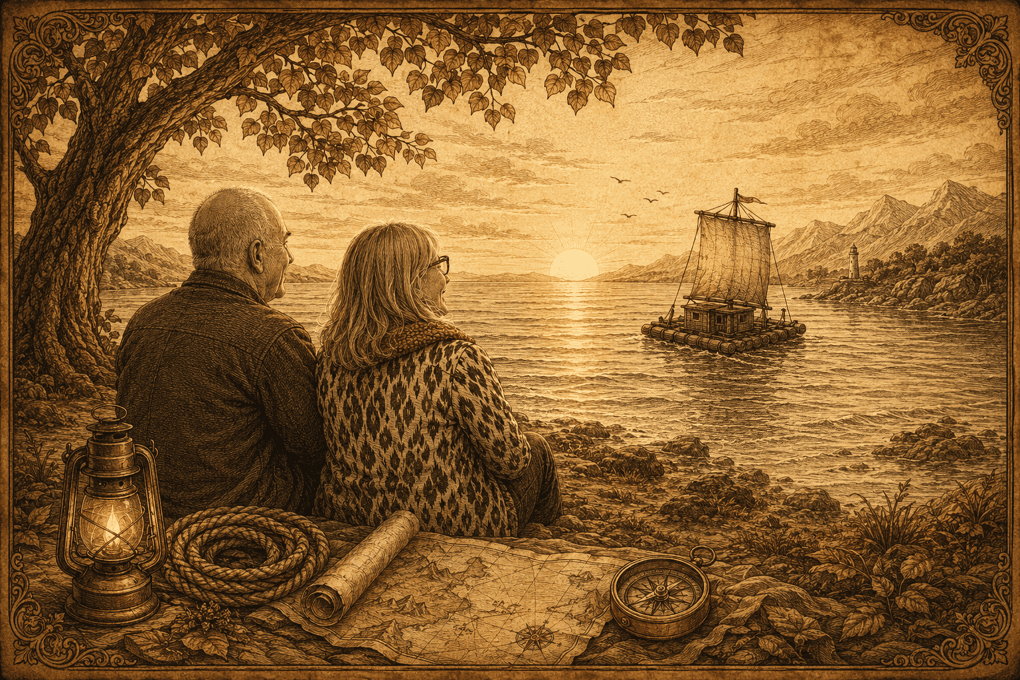
What became clearer to us as we completed the first journey was how much the different parts of the program rely upon one another. Ethics supports mindfulness. Mindfulness makes discernment possible. Courage helps us act upon what we have understood. Friendship supports us when our confidence falters. Joy and calm allow us to experience something of the life towards which we are travelling.
The raft is not any single quality or technique. It is the way these different materials are brought together.
The complete online workbook is freely available and can be followed independently. Some people work through the chapters in sequence. Others explore a particular reflection or practice when it feels relevant. Audio and video resources accompany much of the written material.
There is also an online community that meets twice each week:
Tuesday at 8.00 pm UK time
Sunday at 6.00 pm UK time
At the Tuesday meeting, we introduce the weekly topic. On Sunday, we return to the theme through a different self-reflection question and consider what we may have noticed during the week. Some people attend one meeting; others come to both.
The meetings are peer-led and include a short introduction, time for quiet reflection and an opportunity to explore the material together. No one is expected to speak or disclose personal information. Although reading the chapter beforehand can be helpful, it is not required. Everyone is welcome to listen and participate only as much as feels comfortable.
The meetings are educational and reflective. Raft to Freedom is not a substitute for medical, psychological, or therapeutic support.
Further information, including the workbook, meeting links and newsletter, can be found at raft2freedom.org.


