


We thank Bernat Font for his kind permission to repost this article, which originally appeared on his substack, Berni's Dharma, on January 27, 2026.
********************
The instruction to apply the skills we build in meditation to daily tasks and situations surely helps. It sounds extremely sensible too. Still, I find it even more helpful to think of daily tasks and situations as the material we use to cultivate those skills. It’s a subtle but, to me, impactful change.
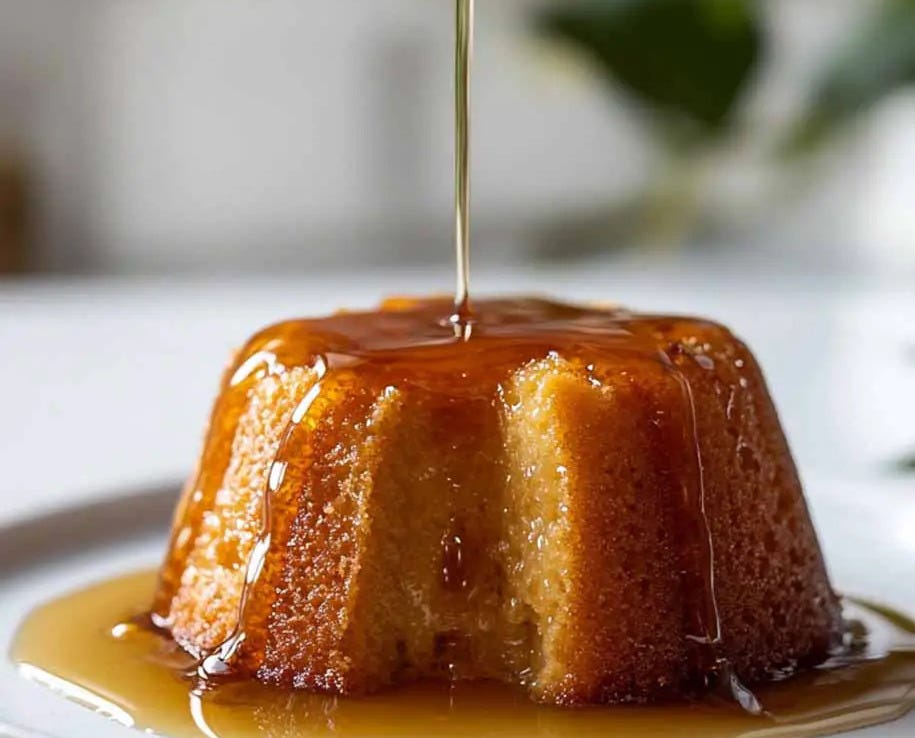
The ‘application model’ gives me the image of pouring syrup over a sponge cake. The cake is already the way it is. It waits passively to receive the independently dissolved liquid. But our daily life is not a motionless cake waiting to be soaked, nor should our dharma practice be a nectar we prepare on the cushion, bottle, and then drizzle over things.
When thinking in terms of ‘applying the practice to our lives’, we see our practice as one thing here and our life as another thing there, and then understandably ask how to bridge or integrate those things. The problem is to have created a split in the first place, which no amount of bridging will resolve.
The sponge cake approach focuses on results, future payoffs. We know how this type of focus leads to poorer practice, to reactive patterns of wanting things to be a certain way and becoming frustrated or confused—in fact, it’s something we observe in meditation! We fall into the causal fantasy that “since we have practiced, now life will behave better.”
Well, nope. First, this expects the effects of practice to carry over, it thinks of life as a sort of substrate. Secondly, life cannot get magically better, no matter how long a retreat was. Life is just shorthand for the people in it, who make independent choices that impact you, for local governments that decide to fix the road you take every morning, for weather events we cannot control, for genetics and habits we’ve fed for far longer than our last retreat.
The application model risks picturing skills as finished projects, tools ready to use. And if the job is shoddy, we must have sharpened the tools wrong or not enough, so let’s go back to the workshop. Instead, I prefer to keep thinking in terms of acquiring, building and refining skills—thanks to the situations we encounter. Daily life situations are not recipients of our practice, but their trigger. Hearing what they ask of us, we use them to continue developing those skills.
There’s no such thing as “applying the practice.” There’s only “practising.”
A dharma practitioner, says Sayadaw U Tejaniya, is someone who uses any experience to grow good qualities of mind—awareness, generosity, kindness, wisdom—whereas a non-practitioner, though unconsciously, ‘uses’ those same experiences to cultivate aversion, clinging, confusion, selfishness… This echoes a famous lojong (mind training) slogan: “transform all mishaps into the path of awakening.”
So, with whomever you share a living space, use that conversation on dividing house chores to practice, to grow your dharma character, rather than applying the practice onto the situation. I don’t take the kindness I presume to have cultivated and bring it to a daily environment hoping it will melt or soften whatever it encounters—the sponge cake approach. The distinction may feel pedantic to some, but personally, it does something to my attitude.
I prefer to think of sailing as an image for practice. Rather than a cake, I have the unpredictable, dynamic wind. I must apply skills, sure, but I don’t pretend that having trained my sailing skills on numerous summers will have tamed the wind and waves. And instead of a syrup waiting to be poured, I have the constant adjustment of the sails.
Balance is not a static state. You cannot reach it forever, stockpile it, or carry it over. Balance = balancing. It’s always active, even if subtly, it is never ‘finished’. In that active sense, balance is a wonderful description of dharma practice, as far as my experience goes, and is often associated with equanimity (upekkhā), a term I’ve been recently translating as ‘balanced engagement’.
Without wind there is no sailing, without obstacles there is no path at all. And too often we just wish for no resistance. But unfavourable conditions are just there, so dream on. Still, would that friction-free state be desirable even? We’d be unable to grow the qualities we cherish. There’d be no need to do so either. It’s basically like wishing for complete nirvana already. I can hear the early Mahāyānists shouting at the perceived goal of the arhat: “dull!”
We get frustrated with our results or progress not only because we want to jump to equanimity already, but because we conceive of it as a settled, nothing-else-to-be-done state. And because we keep imagining that successful practice means to prepare, in our private kitchens, that infallible syrup which will make life like walking on a bed of softened sponge cake.


One Reply to “The mistake of “applying” the practice: the sponge cake approach”
Thank you for this!